
This Thursday 30 March is the launch of the 1st International Day of Zero Waste. The UN has chosen this date to promote sustainable consumption and production patterns, support societal change towards circularity and raise awareness of how zero waste initiatives contribute to advancing the 2030 Agenda for Sustainable Development.
Waste management is an important aspect of environmental improvement. In some countries, it is often linked to, or even partially integrated with sanitation. Like sanitation, waste management integrates liquid and solid collection and treatment.
Zero Waste initiatives are often associated with solid waste, but they also apply to liquid waste. OiEau, an association recognised as being of public utility for more than 30 years and approved as an "Environmental Protection" organisation since 2022, has integrated the waste management to its fields of work. This is the case, for example, of the European project ZEUS(ZERO liquid waste in food industry) which aims to demonstrate the technical and economic feasibility of a total recycling solution for water and dissolved compounds on the MONIN factory site in Bourges.

Discover the ZEUS project presentation (in french)
Data is an essential material for knowledge, which is why OiEau places data analysis at the heart of its strategy. The Information and Knowledge Unit (DDCSI) regularly produces summaries on environment-related topics.
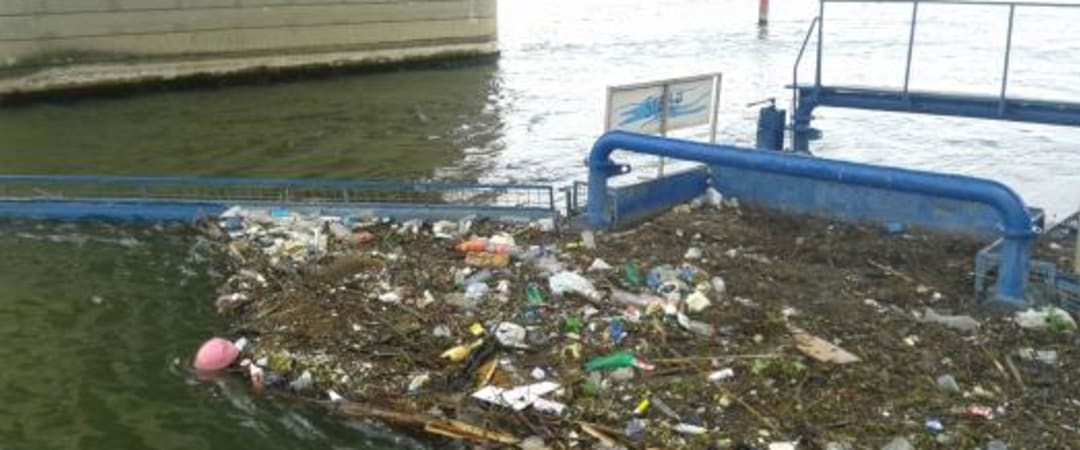
In this respect, Anne-Paule Mettoux-Petchimoutou (OiEau studies and projects officer) published an exploratory synthesis on the management of macro-waste in rivers.
"At the crossroads of different policies, the management of macro-waste in rivers shows the diversity of approaches: "zero waste" approach and reduction at source, improvement of knowledge, especially on flows, collective collection, selective sorting". The aim of this summary was to gather knowledge on the management of macro-waste in rivers.
"A guide will be published in 2023 to organise the collection of macro-waste in rivers and on banks". It will aim to enable any volunteer citizen to organise a collection while raising awareness of the importance of reducing waste.
The management of fresh water, sanitation and waste is part of environmental management in the broad sense. Within the framework of their training courses, OiEau's experts also intervene on the topics of waste and circular economy. Julie Reynaud, in charge of training and studies at OiEau, presents this topic in video: